Rapporto impulsi attuatore e movimento in gradi del Polarmount, quesito matematico

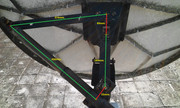
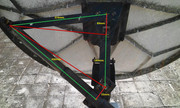
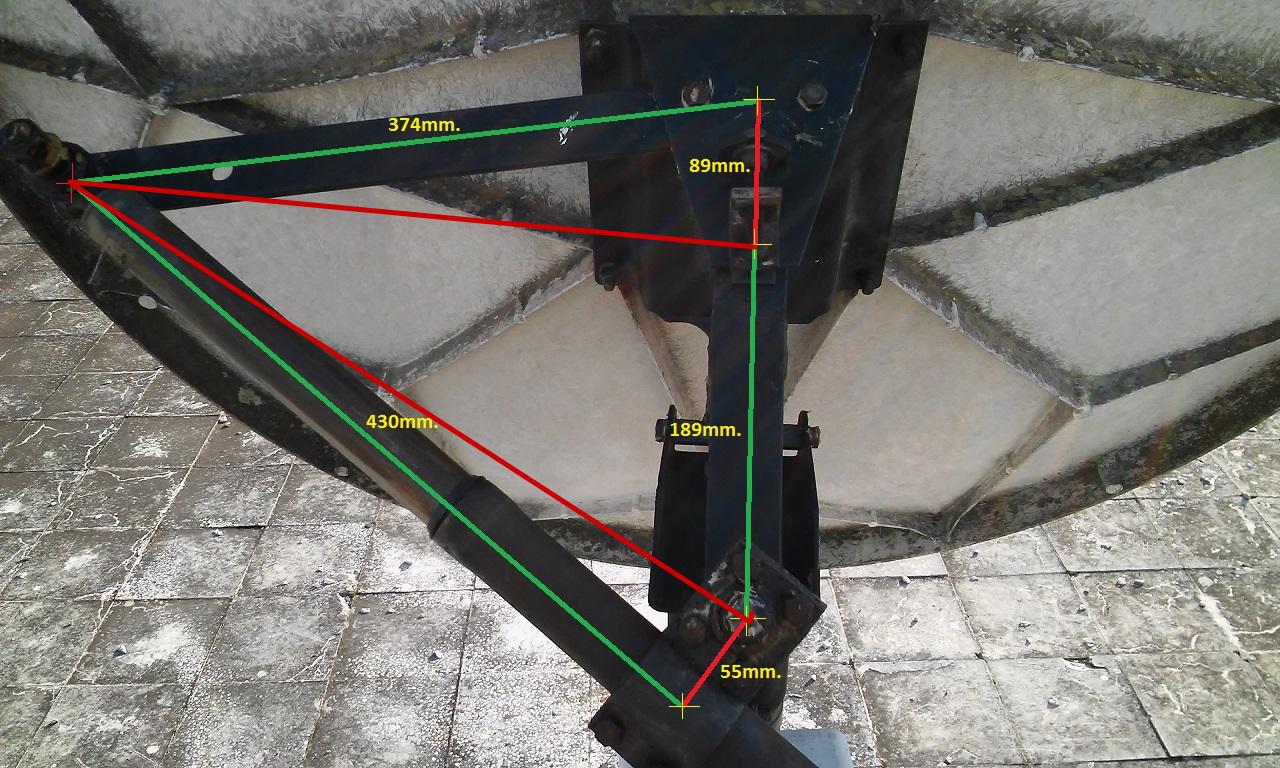
Ecco due foto con didascalie; tutto si basa sul teorema di Pitagora!
Here are two photos with captions; everything is based on the Pythagorean theorem!

Pitagora e la regola del coseno, sì, certo che lo so (è facile!).

Ma non hai risposto alle mie domande:
Questi 90 gradi sono il tuo valore per quello che io chiamo ApexAngle (che in passato chiamavo ambiguamente ZeroAngle) della configurazione del triangolo dell'attuatore? E questo significa che stai supponendo che sia sempre fisso a 90 gradi?

Sembra che tu non capisca cosa intendo con ApexAngle e perché il valore specifico (diverso per diverse configurazioni) sia importante nei calcoli.
Quindi credo che per ora lascerò perdere questo argomento. Sembra che non riusciremo ad andare oltre su questo punto.

Tradotto da:

Pythagoras and the cosine rule, yes of course I know all that (it's easy!).

You didn't answer my questions though:
Are these 90 degrees your value for what I call the ApexAngle (which I called ambiguously ZeroAngle in the old days) of the actuator triangle setup? And does this mean that you are assuming it is always fixed 90 degrees?

You don't seem to understand what I mean with the ApexAngle, and why the specific value (different for different setups) is important in the calculations.
So I guess I'll leave this subject for now. We are not coming any further on this point, it seems.

Ciao,
A33
 
Ho trovato un modo pratico per risolvere il problema del segno più o meno, utilizzando in casi specifici un fattore di -1 invece di 1 (quindi una costante aggiuntiva nel calcolo: E). E ora sembra funzionare correttamente.

Purtroppo, ho scoperto che la soluzione semplice che pensavo funzionasse non funziona in tutte le situazioni. Lungo l'arco, il segno più o meno necessario potrebbe invertirsi, per alcune configurazioni.
Ho trovato la causa matematica dell'inversione. Ora devo verificare se dipende da un solo fattore o forse da una combinazione di fattori. Potrebbe essere un po' un processo di tentativi ed errori...

Tradotto da:

Alas, the simple solution that I thought did work, does not work in all situations, I discovered. Along the arc, the needed plus or minus could swap, for some setups.
I found the mathematical cause for the swap. I must now check, if it is dependent on just one factor, or maybe on a combination of factors. That might be a bit trial and error....

Ciao,
A33
 
Ho trovato la causa matematica dell'inversione. Ora devo verificare se dipende da un solo fattore o forse da una combinazione di fattori.

Nei file di output che ho pubblicato qui, l'errore è presente solo nell'ultimo file @Foxbat, 22dic2025, e solo nella zona estrema compresa tra -65 e -65,8 gradi, ovvero la zona in cui la fascia di Clarke si trova appena sopra l'orizzonte.
Dato che non mi aspetto che @Foxbat riceva nulla in quella zona, per il momento non pubblicherò un nuovo file di output per lui.

Il problema sembra dipendere dal risultato di un certo calcolo, che raggiunge un massimo, in relazione alla direzione dei conteggi di impulsi rispetto alla direzione dell'angolo orario (o forse alla direzione dell'angolo di longitudine del satellite, dovrò controllare).


NB Questa zona a -65 gradi potrebbe essere raggiunta fisicamente o meno dalla sua configurazione; non lo so. Potrebbe essere solo un risultato teorico.
A pensarci bene: potrebbe essere interessante avere alcune misure triangolari della configurazione dell'attuatore, per confrontare ciò che si può concludere dalla combinazione dei metodi di calcolo. Tornerò su questo punto più tardi; prima riparerò e testerò l'errore.


Tradotto da:

In the output files that I posted here, the error is only in the last @Foxbat file, 22dec2025, and only in the extreme zone from -65 to -65.8 degrees, so the zone where the clarke belt is only just above the horizon.
As I don't expect @Foxbat to receive anything there, I will not post a new output file for him at the moment.

The problem seems to be dependent on a certain part calculation outcome, which reaches a maximum, in relation to the direction of the pulsecounts relative to the direction of the hour angle (or maybe the direction of the satellite longitude angle, I'll have to check).


NB This zone at -65 degrees might or might not physically be reached, by his setup; I don't know. It might just be a theoretical outcome.
Come to think of it: it might be interesting to have some triangle measures of the actuator setup, to compare what can be concluded from the combination of calculation approaches. I'll come back to that later; first repair and test the error.


Ciao,
A33

Edited/modificato.
 
Ultima modifica:
Pitagora e la regola del coseno, sì, certo che lo so (è facile!).

Ma non hai risposto alle mie domande:
Questi 90 gradi sono il tuo valore per quello che io chiamo ApexAngle (che in passato chiamavo ambiguamente ZeroAngle) della configurazione del triangolo dell'attuatore? E questo significa che stai supponendo che sia sempre fisso a 90 gradi?

Sembra che tu non capisca cosa intendo con ApexAngle e perché il valore specifico (diverso per diverse configurazioni) sia importante nei calcoli.
Quindi credo che per ora lascerò perdere questo argomento. Sembra che non riusciremo ad andare oltre su questo punto.

Tradotto da:

Pythagoras and the cosine rule, yes of course I know all that (it's easy!).

You didn't answer my questions though:
Are these 90 degrees your value for what I call the ApexAngle (which I called ambiguously ZeroAngle in the old days) of the actuator triangle setup? And does this mean that you are assuming it is always fixed 90 degrees?

You don't seem to understand what I mean with the ApexAngle, and why the specific value (different for different setups) is important in the calculations.
So I guess I'll leave this subject for now. We are not coming any further on this point, it seems.

Ciao,
A33
your right , i dont understand what angle you talk about !
give me a picture , a drawing to explain me.

JP
 
Ecco il tuo nuovo foglio di calcolo. Non credo ci siano grandi differenze rispetto all'ultimo, ma lascio a te l'analisi e la relazione qui sul forum. Io fornisco solo il calcolo.

Dato che si tratta “solo” di risultati di calcoli teorici, penso anche che se i risultati sono davvero entro 2 o 3 conteggi di impulsi dalla realtà per l'intero arco, sono abbastanza soddisfacenti.

Tradotto da:

Here is your new spreadsheet. Not much difference to the last one I believe, but I leave the analyzing and reporting here on the forum to you. I just supply the calculation.
Given the fact that these are 'just' theoretical calculation results, I also think that if the results are really within 2 or 3 pulse counts from reality for the whole arc, they are pretty satisfactory.
Scusa la risposta un po' in ritardo, confermo che i risultati sono entro 1 o 2 impulsi da quelli da me rilevati e memorizzati, per alcune posizioni addiritura coincidono al 100% per altre variano di un solo pulse... ed in altri di due, calcolando che ai fini della ricezione e stando al segnale rilevato ±1 pulse non fa nessuna differenza e che premendo il più brevemente possibile i tasti est ovest l'attuatore si muove e conteggia come minimo più di due/tre pulse... penso che meglio di così non si possa fare, quindi complimenti per l'ottimo lavoro :eusa_clap: senza nulla togliere alle tabelle fornitemi in precedenza da @BOBBYS. forse meno precise ( ma non più di tanto) perchè basate su interpolazione dei dati tra i satelliti più vicini ma ugualmente valide.
 
  • Mi Piace
Reazioni: a33
confermo che i risultati sono entro 1 o 2 impulsi da quelli da me rilevati e memorizzati

È un'ottima notizia. :)
Presumo che questo risultato sia stato ottenuto con l'ultimo file calcolato, con le posizioni dei satelliti di input (più) estreme?

Dato che ora avevo 6 valori di conteggio degli impulsi di input da te forniti, ho verificato i calcoli prendendo 4 valori di input solo sul lato est e 4 valori di input solo sul lato ovest. In questi casi, ho ottenuto da 15 a 20 conteggi di impulsi dai valori calcolati per 65W e 90E (all'estremità dell'orizzonte del tuo arco visibile).
Quindi questa è la prova che in effetti è meglio prendere due dei conteggi di impulsi ai lati estremi del tuo arco.
E che questo speciale metodo di calcolo segue la curva del movimento dell'attuatore in modo molto accurato.


Nel frattempo ho scoperto (vedi i post sopra) che il fattore +1 o -1 non è una costante, ma una variabile (dipendente dalla posizione del satellite verso cui è puntata la parabola/l'attuatore). Ho trovato un buon modo per calcolarlo/determinarlo, quindi sembra che il problema sia risolto. L'equazione ora torna ad essere:
PulseCount = A + factorE * (sqareroot( B + C*cos(UsalsAngle) + D*sin(UsalsAngle) ) ).


Non ho ancora determinato cosa ci sia di speciale nell'angolo in cui avviene lo scambio tra +1 e -1. Per questo, sarei lieto se potessi effettivamente misurare alcune cose sulla tua montatura polare.
Guarda l'immagine a destra del post n. 93: https://www.digital-forum.it/thread...quesito-matematico.217614/page-5#post-7787986
e/o l'immagine aggiunta a questo post: https://www.satelliteguys.us/xen/threads/usals-for-buds.168945/page-2#post-4289371

Vorrei queste misure:
Nel piano perpendicolare all'asse di rotazione:
1. distanza T-A: dalla parte superiore T all'asse A (uso un valore positivo per avere l'attuatore sul lato est dell'asse, un valore negativo quando è sul lato ovest);
2. distanza A-BB: dall'asse A al bullone inferiore BB;
3. distanza T-BB(RefSat): dalla parte superiore T dell'attuatore al bullone inferiore BB (sul supporto), quando la parabola è puntata verso il RefSat (una posizione satellitare di riferimento, necessaria per determinare l'angolo della posizione apicale della configurazione dell'attuatore). Si prega di utilizzare un satellite situato all'incirca a sud;
4. distanza B-BB: dalla parte inferiore B dell'attuatore al bullone inferiore BB sul supporto.

Quando c'è una differenza di altezza tra la parte superiore T dell'attuatore e la parte inferiore B dell'attuatore (vedere il disegno satelliteguys), assicurarsi di misurare B-BB ancora nel piano perpendicolare all'asse di rotazione; e misurare anche la distanza 5:
5. H: Differenza di altezza dell'attuatore, tra la parte superiore T e la parte inferiore B. Misurarla perpendicolarmente al piano sopra indicato (il piano perpendicolare all'asse di rotazione), quindi, in altre parole, la misurazione viene effettuata parallelamente all'asse di rotazione.

E naturalmente ho bisogno (anche se in questo caso potrei già calcolarlo da solo):
6. il conteggio degli impulsi del satellite di riferimento.
E naturalmente, quale satellite (longitudine del satellite) avete scelto come RefSat?

Tradotto da:

That is very good news. :)
I assume this result was with the last calculated file, with the (more) exteme input satellite positions?

As I now had 6 input pulse count values from you, I checked the calculations by taking 4 input values at just the east side, and 4 input values at just the west side. In these cases, I ended 15 to 20 pulse counts from the calculated values for 65W and 90E (at the horizon end of your visible arc).
So this is proof, that indeed it is best to take two of the pulse counts at the extreme sides of your arc.
And that this special calculation method is following the curve for the actuator movement very accurately.


In the meantime I have found (see the posts above), that the +1 or -1 factor is not a constant, but a variable (dependent on the satellite position that the dish/actuator setup is aimed at). I have found a good way to calculate/determine it, so that seems to be solved. The equation now is going back to:
PulseCount = A + factorE * (sqareroot( B + C*cos(UsalsAngle) + D*sin(UsalsAngle) ) ).


I have not determined yet, what is special about the angle at which the swap between +1 and -1 takes place. For that, I would be glad if you indeed can measure some things at your polar mount.
Please look at the picture at the right of post #93: https://www.digital-forum.it/thread...quesito-matematico.217614/page-5#post-7787986
and/or at the picture added to this post: https://www.satelliteguys.us/xen/threads/usals-for-buds.168945/page-2#post-4289371

I would want these measures:
In the plane perpendicular to the rotation axis:
1. distance T-A: Top to Axis (I use a positive value for having the actuator at the east side of the axis, a negative value when at the west side);
2. distance A-BB: Axis to Bottom Bolt;
3. distance T-BB(RefSat): from Top of the actuator to Bottom Bolt (on the mount), when the dish is aimed at the RefSat (a reference satellite position, that is needed to determine the angle of the apex position of your actuator setup). Please use a satellite somewhere around due south;
4. distance B-BB: Bottom of actuator to Bottom Bolt at the mount.

When there is a height difference between the Top T of the actuator and the Bottom B of the actuator (see the satelliteguys drawing), be sure to measure B-BB still in the plane perpendicular to the rotation axis, and also measure distance 5:
5. H: Height difference of the actuator, between top T and bottom B. Measure this perpendicular to the above plane (the plane perpendicular to the rotation axis), so in other words the measurement is done parallel to the rotation axis.

And of course I need (though in this case I could already calculate it myself):
6. the pulse count of the Refence satellite.
And of course, what satellite (satellite longitude) longitude did you chose as RefSat?

Translated from:

Ciao,
A33

 
Ultima modifica:
I found the drawings you provided some time ago.
On my mount, I fixed the actuator in a plane perpendicular to axis A,so H=0 for me.
The distance B-BB is greater (110mm) because I created a rigid part.
The angle between T-B and B-B is still 90°.

Ho trovato i disegni che hai fornito qualche tempo fa.
Sul mio supporto, ho fissato l'attuatore su un piano perpendicolare all'asse A,quindi H=0 per me.
La distanza B-BB è maggiore (110 mm) perché ho creato una parte rigida.
L'angolo tra T-B e B-B è ancora di 90°.
 
1. Sul mio supporto, ho fissato l'attuatore su un piano perpendicolare all'asse A,quindi H=0 per me.
2. La distanza B-BB è maggiore (110 mm) perché ho creato una parte rigida.
3. L'angolo tra T-B e B-B è ancora di 90°.

1. Va bene, H dovrebbe preferibilmente essere sempre zero. Altrimenti si creano forze inutili.
Ma nei calcoli è bene tenerne conto. Era rilevante, nel caso di @femi.

2. Sì, so che hai un B-BB (più) lungo. Come ho scritto prima da qualche parte, si riduce la possibilità di “ribaltarsi” o “capovolgersi”, o comunque si chiami. È una cosa positiva, quando si ha un ampio raggio visibile.

3. Certo. Non ho mai detto il contrario.
Non capisco perché lo sollevi, però. Non è collegato all'angolo al vertice, come lo chiamo io.
Immagino che se segui e leggi i link che ho fornito in questo thread, troverai le spiegazioni del perché non uso un valore fisso di 90 gradi per l'angolo al vertice. Penso che l'angolo al vertice nella configurazione di @Foxbat sia di circa 80 gradi, come ho scritto prima. Sarò felice di calcolarlo, dalle misurazioni della configurazione del triangolo dell'attuatore.

Tradotto da:


1. That is good, H should preferably always be zero. Otherwise you create unnecessary forces.
But in the calculations it is good to account for it. It was relevant, in the case of @femi.

2. Yes I know you have a long(er) B-BB. As I wrote before somewhere, you reduce the chance of 'flipping over' or 'flopping over', or however it is called. That is a good thing, when you have a big range of visible arc.

3. Of course. I never said otherwise.
I don't know why you bring that up, though? It is not connected to the apex angle, as I call it.
I guess when you follow and read the links I gave in this thread, you'll find explanations why I don't use a fixed apex angle value of 90 degrees. I think the apex angle in the setup of @Foxbat would be about 80 degrees, as I wrote before. I'll be happy to calculate it, from his actuator triangle setup measurements.

Ciao,
A33
 
Vorrei queste misure:
Nel piano perpendicolare all'asse di rotazione:
1. distanza T-A: dalla parte superiore T all'asse A (uso un valore positivo per avere l'attuatore sul lato est dell'asse, un valore negativo quando è sul lato ovest);
2. distanza A-BB: dall'asse A al bullone inferiore BB;
3. distanza T-BB(RefSat): dalla parte superiore T dell'attuatore al bullone inferiore BB (sul supporto), quando la parabola è puntata verso il RefSat (una posizione satellitare di riferimento, necessaria per determinare l'angolo della posizione apicale della configurazione dell'attuatore). Si prega di utilizzare un satellite situato all'incirca a sud;
4. distanza B-BB: dalla parte inferiore B dell'attuatore al bullone inferiore BB sul supporto.

Quando c'è una differenza di altezza tra la parte superiore T dell'attuatore e la parte inferiore B dell'attuatore (vedere il disegno satelliteguys), assicurarsi di misurare B-BB ancora nel piano perpendicolare all'asse di rotazione; e misurare anche la distanza 5:
5. H: Differenza di altezza dell'attuatore, tra la parte superiore T e la parte inferiore B. Misurarla perpendicolarmente al piano sopra indicato (il piano perpendicolare all'asse di rotazione), quindi, in altre parole, la misurazione viene effettuata parallelamente all'asse di rotazione.

E naturalmente ho bisogno (anche se in questo caso potrei già calcolarlo da solo):
6. il conteggio degli impulsi del satellite di riferimento.
E naturalmente, quale satellite (longitudine del satellite) avete scelto come RefSat?

Tradotto da:

I would want these measures:
In the plane perpendicular to the rotation axis:
1. distance T-A: Top to Axis (I use a positive value for having the actuator at the east side of the axis, a negative value when at the west side);
2. distance A-BB: Axis to Bottom Bolt;
3. distance T-BB(RefSat): from Top of the actuator to Bottom Bolt (on the mount), when the dish is aimed at the RefSat (a reference satellite position, that is needed to determine the angle of the apex position of your actuator setup). Please use a satellite somewhere around due south;
4. distance B-BB: Bottom of actuator to Bottom Bolt at the mount.

When there is a height difference between the Top T of the actuator and the Bottom B of the actuator (see the satelliteguys drawing), be sure to measure B-BB still in the plane perpendicular to the rotation axis, and also measure distance 5:
5. H: Height difference of the actuator, between top T and bottom B. Measure this perpendicular to the above plane (the plane perpendicular to the rotation axis), so in other words the measurement is done parallel to the rotation axis.

And of course I need (though in this case I could already calculate it myself):
6. the pulse count of the Refence satellite.
And of course, what satellite (satellite longitude) longitude did you chose as RefSat?

Ciao,
A33

Mi sono bloccato su questo passaggio : :eusa_think::eusa_wall:

Quando c'è una differenza di altezza tra la parte superiore T dell'attuatore e la parte inferiore B dell'attuatore (vedere il disegno satelliteguys), assicurarsi di misurare B-BB ancora nel piano perpendicolare all'asse di rotazione; e misurare anche la distanza 5:
5. H: Differenza di altezza dell'attuatore, tra la parte superiore T e la parte inferiore B. Misurarla perpendicolarmente al piano sopra indicato (il piano perpendicolare all'asse di rotazione), quindi, in altre parole, la misurazione viene effettuata parallelamente all'asse di rotazione.

I'm stuck on this step ::eusa_think::eusa_wall:

When there is a height difference between the Top T of the actuator and the Bottom B of the actuator (see the satelliteguys drawing), be sure to measure B-BB still in the plane perpendicular to the rotation axis, and also measure distance 5:
5. H: Height difference of the actuator, between top T and bottom B. Measure this perpendicular to the above plane (the plane perpendicular to the rotation axis), so in other words the measurement is done parallel to the rotation axis.

Ciao
 
Ultima modifica:
Mi sono bloccato su questo passaggio : :eusa_think::eusa_wall:

Quando c'è una differenza di altezza tra la parte superiore T dell'attuatore e la parte inferiore B dell'attuatore (vedere il disegno satelliteguys), assicurarsi di misurare B-BB ancora nel piano perpendicolare all'asse di rotazione; e misurare anche la distanza 5:

Cercherò di spiegarmi meglio!

Nel disegno a sinistra nel post n. 93, il piano in cui BOBBYS ha indicato i punti BB, A e O è il piano perpendicolare all'asse di rotazione. Infatti, A è l'asse e la linea tratteggiata/interrotta è l'“asse di rotazione dell'antenna”.
Le misurazioni da 1 a 4 devono essere effettuate su quel piano A-BB-O. (Oppure su un piano parallelo a quello, ma è essenzialmente la stessa cosa, poiché le misure sono identiche).

Normalmente, l'attuatore è montato parallelamente a questo piano, in modo che anche T (parte superiore) e B (parte inferiore) dell'attuatore si trovino su questo piano (parallelo).
Nell'immagine in basso nel disegno di satelliteguys, ho mostrato una configurazione in cui la parte superiore T dell'attuatore non era montata sul piano (parallelo), ma (in modo esagerato) da qualche parte in alto sul piatto. Poiché la parte superiore e quella inferiore non sono più parallele al piano, si verifica una differenza di altezza (tra la parte superiore T e quella inferiore B) rispetto al piano. Questo è ciò che chiamo differenza di altezza, che ho incorporato nel mio disegno e nel mio metodo di calcolo.

Se questa differenza di altezza è superiore a 1 o 2 cm, potrebbe diventare influente, quindi potrebbe essere utile misurarla.
È probabile che la differenza di altezza sia pari a zero. Quindi, forse in questo caso, non è affatto rilevante.

È più chiaro ora?

Tradotto da:

I'll try to explain better!

In the left drawing in post #93, the plane where BOBBYS indicated the points BB, A and O is the plane, perpendicular to the rotation axis. In fact, A is the axis, and you see the dotted/interrupted line as the "antenna pivot axis".
The measurements 1 till 4 must be done in that A-BB-O plane. (Or in a plane parallel to that plane, but that is essentially the same, as the measures are then identical).

Normally, the actuator is mounted parallel to this plane, so that T (top) and B (bottom) of the actuator are also in this (parallel) plane.
In the bottom picture in the satelliteguys drawing, I showed a setup where the Top T of the actuator was not mounted in the (parallel) plane, but (exaggerated) somewhere high up at the dish. As Top and Bottom are no longer parallel to the plane, a height difference occurs (between Top T and Bottom B), relative to the plane. This is what I call the height difference, which I incorporated in my drawing, and in my calculation method.

If this height difference is more than 1 or 2 cm, it might become of influence, so it might be good to measure that.
Chances are, that you have height difference = zero. So maybe in this case, it is not relevant at all.

Is it clearer now?

Ciao,
A33
 
È più chiaro ora?

Tradotto da:

Ciao,
A33
Si, ora è più chiaro, Il mio polarmount Channel Master è esattamente quello della figura postata da @BOBBYS, immagini tratte dal libretto istruzioni del montaggio, quindi penso non ci sia bisogno di questa misura relativa alla differenza di altezza tra la parte superiore T dell'attuatore e la parte inferiore B dell'attuatore, devo ancora controllare ma mi sembra stanno sullo stesso piano.

cercherò di farti avere le misure richieste quanto prima.

Yes, now it's clearer, My polarmount Channel Master is exactly the one in the picture posted by @BOBBYS, images taken from the assembly instruction booklet, so I think there is no need for this measurement relating to the height difference between the upper part T of the actuator and the lower part B of the actuator, I still have to check but it seems to me they are on the same plane.

I'll try to get the requested measurements to you as soon as possible.

Ciao
 
Ultima modifica:
cercherò di farti avere le misure richieste quanto prima.

Fai con calma, non ho fretta! :)
Devo comunque fare ancora qualche controllo sulla mia calcolatrice.

(E sì, dalle foto avevo capito che hai un supporto Channel Master.)

Tradotto da:
Take your time, I am in no hurry! :)
I still have to do some checkings on my calculator, anyway.

(And yes, I knew from the photos that you have a Channel Master mount.)

Ciao,
A33
 
3. Of course. I never said otherwise.
I don't know why you bring that up, though? It is not connected to the apex angle, as I call it.
I guess when you follow and read the links I gave in this thread, you'll find explanations why I don't use a fixed apex angle value of 90 degrees. I think the apex angle in the setup of @Foxbat would be about 80 degrees, as I wrote before. I'll be happy to calculate it, from his actuator triangle setup measurements.

ok i dont understand yet what you call "APEX" angle , A33 please give me a small drawing .
 
ok i dont understand yet what you call "APEX" angle ,

Ok, ancora non capisco cosa intendi per angolo “APEX”.

Se hai davvero seguito i link che ti ho fornito, pensavo che ormai avresti capito e/o avresti posto domande più dettagliate su ciò che non ti è chiaro.
Hai davvero seguito i link, come ti avevo suggerito? Cosa non ti era ancora chiaro?

Le nozioni di base sono qui: https://www.satellites.co.uk/forums...-positioner-with-diseqc-decoder.177499/page-2
Vedi in particolare i post n. 27, (n. 31) e n. 37

Nel n. 37 concludo (il grassetto era già presente nel testo originale in inglese):
In questo modo, la posizione di BB e T può essere ovunque (rispetto alla parabola e al supporto) e puoi scegliere dove desideri avere il controllo più preciso dell'attuatore (a circa 90 gradi!).

...

Tuttavia, la posizione esattamente a sud/nord si trova quindi da qualche parte tra 0 e 180 gradi, non in un punto fisso obbligatorio prestabilito. Nel calcolo è necessario determinare dove si trova esattamente. In questo modo è possibile aggiungere un angolo USALS (positivo o negativo), che ha zero a sud/nord.
Quella posizione zero la calcolo con la mia equazione ZeroAngle (= ApexAngle), sopra.

[ Ora mi rendo conto che uso la parola zero per due situazioni: per l'intervallo zero-180 gradi e per la posizione zero: l'angolo esattamente a sud/nord che si trova da qualche parte tra 0 e 180 gradi. Mi scuso per la confusione.
Alla ricerca di un altro termine: d'ora in poi cercherò di chiamare ZeroAngle “ApexAngle”, dove Apex è il punto più alto dell'arco, che ovviamente si trova esattamente a sud/nord.
L'intervallo da 0 a 180 gradi potrebbe anche essere chiamato angolo dell'attuatore o qualcosa del genere? Quindi ActuatorAngle = ApexAngle + USALSAngle?]

Quindi si tratta della posizione esattamente a sud/nord che si trova da qualche parte tra 0 e 180 gradi, ma non necessariamente ad un angolo fisso di 90 gradi o giù di lì.
Questo perché la posizione di BB e T può essere ovunque, rispetto alla superficie della parabola e al supporto, come ho già citato sopra.


Nell'ultima foto che hai pubblicato nel post n. 140 di questo thread, hai indicato come angolo al vertice un angolo di 90 gradi, perché la tua configurazione ha un angolo al vertice di (circa) 90 gradi. (Sul lato ovest, quindi calcolerei con -90 gradi).
Aggiungendo l'angolo USALS a questo angolo di 90 gradi attorno all'asse nella foto, si ottiene l'angolo totale tra i lati del angolo L1 e L2 (linee rosse). Questo angolo è compreso tra 0 e 180 gradi ed è la base dell'angolo al vertice + angolo Usals.
Ora, questo ApexAngle non è di 90 gradi in tutte le configurazioni; puoi vedere che nella configurazione di @Foxbat è più piccolo (immagino circa 80 gradi). Ora capisci perché? (Due differenze rispetto alla tua configurazione).


Tradotto da:

When you really followed the links that I gave, I thought you'd understand it by now, and/or pose more detailed questions about what is not clear to you.
Did you really follow the links, as I suggested? What was still unclear?


The basics are here: https://www.satellites.co.uk/forums...-positioner-with-diseqc-decoder.177499/page-2
See especially posts #27, (#31,) and #37

In #37 I conclude (bold was already in the original english text):
That way, the position of BB and T can be anywhere (relative to the dish and mount), and you can choose where you want to have your most precise actuator control (at about 90 degrees!).

...

However, the due south/north position then lies somewhere between that 0-180 degrees, not at an obligatory fixed point in advance. In your calculation you have to determine where exactly. So that you can add a (positive or negative) USALS angle to it, which has zero at due south/north.
That ZeroPosition I calculate with my ZeroAngle (= ApexAngle) equation, above.

[ I now realize I use the word zero for two situations: for the zero-180 degrees range; and for the zero-position: due south/north angle that lies somewhere between the 0 and 180 degrees. Sorry for the confusion.
Looking for another word: From now on I will (try to) call the ZeroAngle the ApexAngle, the Apex being the highest point of the arc, that is ofcourse situated exactly due south/north.
The range from 0-180 degrees could also be called actuator angle or so? So that ActuatorAngle = ApexAngle + USALSAngle?]

So it is all about the due south/north position that lies somewhere between that 0-180 degrees, but not at an obligatory fixed angle of 90 degrees or so.
That is because the position of BB and T can be anywhere, relative to the dish face and mount, as I already cited above.


In the last photo that you posted in #140 of this thread, you have indicated as the apex angle an angle of 90 degrees, because your setup has an apex angle of (about) 90 degrees. (At the west side, so I would calculate with -90 degrees.)
Add the USALS angle to this 90 degree angle around the axis in the photo, and you get the total angle between angle legs L1 and L2 (red lines), This angle is between 0 and 180 degrees, and basis of the ApexAngle+UsalsAngle.
Now this ApexAngle is not 90 degrees in all setups; you can see with the setup of @Foxbat it is smaller (I guess about 80 degrees). Can you now see why that is? (Two differences to your setup.)


A33.
 
Ho già riletto i tuoi post diverse volte e sono bloccato sulla tua ipotesi sull'angolo APEX: per me, i cilindri si muovono sempre di 90° rispetto al loro asse di montaggio.Procedo con calcoli successivi utilizzando le formule trigonometriche standard.Tuttavia, Excel o OpenOffice potrebbero non aderire perfettamente alla formula che ho creato.Ammiro molto il tuo studio (perché è diverso dal mio) e cerco di capire il tuo ragionamento, non di criticarlo.

I've already reread your posts several times, and I'm stuck on your APEX angle assumption: for me, the cylinders are always moving at 90° relative to their mounting axis.I proceed by successive calculations using standard trigonometric formulas.However, Excel or OpenOffice might not perfectly adhere to the formula I created.I greatly admire your study (because it differs from mine) and I'm trying to understand your reasoning, not criticize it.
 
@a33 ed eventualmente @Dreambox59

Guardate se va bene o eventualmente fatemi sapere cosa devo aggiungere,Il disco guarda a SUD, all' apice della elevazione, a pochi step da Hotbird che è il mio satellite di riferimento.

Tutte le misure ± 1mm. salvo errori.

@a33 and possibly @Dreambox59

See if it's ok or let me know what I need to add, Dish faces SOUTH, at the peak of the elevation, a few steps from Hotbird which is my reference satellite.

All measurements ± 1mm. Errors excepted.

 
Ultima modifica:
@Foxbat :

OK, abbiamo la tua longitudine, quindi il sud come riferimento va bene.

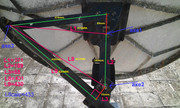
Tutte le misure sono OK, tranne due: vedi le due linee rosse aggiuntive (T-A e T-BBref) che ho aggiunto nell'immagine e di cui avrei bisogno.
(TBBref ovviamente mentre è puntato verso sud, ora che hai scelto quella come posizione di riferimento).


[Potrei calcolare TA e TBBref dalle tue misure, ma preferisco una lunghezza misurata piuttosto che un valore di errore di misura accumulato della lunghezza calcolata).


E OOOPS, ora vedo che l'angolo al vertice è di circa 100 gradi, non di circa 80 gradi. Che sciocco!
Avevo superficialmente considerato la stessa linea di @Foxbat come la linea rilevante.
(Sto ancora preparando una risposta/spiegazione a @Dreambox59 , ma forse lui vede che in questa immagine non sono 90 gradi?)

Questi 100 gradi sarebbero comunque più congruenti con i 95,77 (circa 96) gradi che avevo già calcolato come ApexAngle per la configurazione di Foxbat, che mi aveva creato qualche problema. Pensavo che avrei dovuto indagare ulteriormente se avessi commesso un errore e che forse avrebbe dovuto essere 180-96 = 84 gradi. Ma ora credo che i miei calcoli originali potrebbero essere corretti fin dall'inizio. Comunque controllerò!

Tradotto da:

@Foxbat :
OK, we have your Longitude, so the due south as reference is alright.

All measures are OK, except two: see the two extra red lines (T-A and T-BBref) I added in the picture, that I'd need.
(TBBref of course while aimed at due south, now that you have chosen that as your reference position.)


[I could calculate TA and TBBref from your measures, but I'd prefer a measured length over an accumulated-measure-errors value of the calculated length.)


And OOOPS, I now see that the ApexAngle is about 100 degrees, not about 80 degrees. Foolish me!
I had superficially taken the same line that @Foxbat did as the relevant line.
(I'm still preparing a reaction/explanation to @Dreambox59 , but maybe he sees that it isn't 90 degrees on this picture?)

This 100 degrees would however be more congruent to the 95.77 (about 96) degrees that I had calculated already as the ApexAngle for the setup of Foxbat, which had troubled me. I thought I'd have to investigate further if I had made an error, and that it might have to be 180-96 = 84 degrees. But now I guess my original calculations might be right all along. I'll still check this, though!

Ciao,
A33
 
@Foxbat :

Tutte le misure sono OK, tranne due: vedi le due linee rosse aggiuntive (T-A e T-BBref) che ho aggiunto nell'immagine e di cui avrei bisogno.

Tradotto da:

@Foxbat :

All measures are OK, except two: see the two extra red lines (T-A and T-BBref) I added in the picture, that I'd need.
(TBBref of course while aimed at due south, now that you have chosen that as your reference position.)

Ciao,
A33

Ok, provvederò

Ok, I'll take care of it

Ciao


Nota:

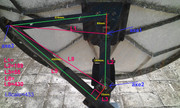
Lo so che le misure devono essere più precise possibili, ho cercato di fare del mio meglio ma causa problemi visivi, occhiali monofocali non adatti ad una certa distanza, metro con cui ho preso le misure in cui misura di può variare 1 mm. a secondo di come si utilizza data la presenza di una liguetta mobile ad angolo retto che ha gioco di un mm. , ci potebbero essere delle incongruenze visto che ad esempio L 8 mi risulta 431mm. mentre ne vedo calcolati 433mm.

@Dreambox59 so che 433mm. è il risultato in base alle misure che ho forninto, quindi non lo metto in dubbio.

Essendo axe 2 flottante su nodo sferico la distanza L3 può variare si misurata fisicamente da centro sfera a centro della metà del diametro dell'attuatore, o misurata "in altro modo" ad esempio alla prima tornata di misure avrei messo 60 mm.anzichè 55mm. :eusa_doh::eusa_wall: può sembrare strano ma L3 è una misura un po' difficile da prendere, perchè il supporto attuatore quello fissato con 6 bulloni, pende verso il basso e non perfettamente in piano con la parte del polarmoun dove e fissato BB o axe 2

Quando devo costruire qualcosa da 0 o faccio un disegno tecnico sono preciso al decimo di millimetro, conosco cosè un calibro o un micrometro... ma in questo caso ho usato un metro flessibile .

Mi scuso quindi se c'è qualcosa che non va bene e sono disposto a misurare tutto nuovament

Una domanda per @Dreambox59, il polarmount che si vede al post # 106 è in gran parte autocostruito?

Translation

Note:

I know the measurements need to be as precise as possible. I tried my best, but due to vision problems, single-vision glasses not suitable for a certain distance, and the tape measure I used can vary by 1 mm depending on how it's used, given the presence of a right-angled movable tongue with a 1 mm play, there could be some inconsistencies for example L 8 appears to me to be 431 mm while I see 433 mm calculated.

@Dreambox59 I know that 433mm is the result based on the measurements I provided, so I don't question it.

Since Axe 2 floats on a spherical node, the distance L3 can vary, whether physically measured from the center of the sphere to the center, by half the actuator diameter, or measured "in another way." For example, in the first round of measurements, I would have used 60 mm instead of 55 mm. :eusa_doh::eusa_wall: It may seem strange but L3 is a somewhat difficult measurement to take, because the actuator support, the one fixed with 6 bolts, hangs downwards and is not perfectly flat with the part of the polarmount where the BB or axe 2 is fixed

When I have to build something from scratch or make a technical drawing I am precise to the tenth of a millimeter, I know what a caliper or a micrometer is... but in this case I used a flexible tape measure.

So I apologize if there's anything wrong, and I'm willing to measure everything again.

A question for @Dreambox59, is the polarmount you see in post #106 largely homebuilt?
 
Ultima modifica:
Indietro
Alto Basso